The Xi Jinping Era by James C. Hsiung
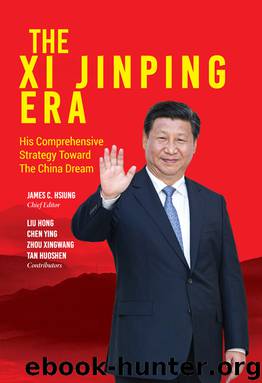
Author:James C. Hsiung
Language: eng
Format: epub
Publisher: CN Times Books Inc.
Deliberative Democracy Fulfills Potential
In 2000, John Gastil of the University of Washington wrote a book entitled By Popular Demand: Revitalizing Representative Democracy Through Deliberative Elections. In the book, he writes that representative democracy is beset with a crisis, and that in order to revitalize representative democracy, during the election, randomly selected panels of citizens should be convened to deliberate on ballot measures and candidates. Voters would learn about the judgments of these citizen panels from voting guides and possibly information printed on official ballots.57
Professor Fishkin had similar assumptions and specially designed a deliberative system. Though the idea was good, the realities were not.58 In 1992, Fishkin planned to hold an “improved primary election” in the way of deliberative polling during the American presidential primary election. But his plan failed because of budget issues.
Just like the people of the US who wish to activate their representative democracy with deliberative democracy, the CPC wishes to use its own systemic potentials with deliberative democracy and, indeed, realize the dream to a certain degree.
This attempt started as early as 2005. Back then the final stage of the “Zeguo experiment” was to submit the resolution formed by the randomly sampled representatives to the town’s people’s congress for voting. This is indeed a connection between the deliberative consultation and the existing system, and its results amazed Fishkin—the consultation directly influenced the decisions reached. Later, in the Zeguo Township’s democratic heart-to-heart discussions on public budgeting held in 2008 and 2009, with two more institutional arrangements, the consultations activated the core mechanism of the original political structure—the people’s congress system. The first institutional arrangement was to invite the township’s people’s representatives to sit in on the discussion process; and the second institutional arrangement was to submit the resolution formed by the randomly sampled representatives to the town’s people’s congress (PC) delegates for voting. At the same time, the randomly selected representatives were invited to sit in on the discussion by the township’s PC delegates. The design of the two links had two effects: First, sitting in on each other’s discussions greatly intensified the PC delegates’ self-awareness. The PC delegates that came to hear the discussion were very serious, and they felt great pressure, likely thinking “in a few days, the villager representatives will sit in on our discussion, how would their delegates feel if our discussions are not as excellent as theirs?” Second, the dormant functions of the grassroots PC were activated. According to the institutional design, the PC has the right to deliberate on the government budget and supervise budgetary enforcement. But, for a long time, this function had been in a dormant state, though, informally, the PC does sometimes review the government budget. With the launch of the deliberative democracy experiment, under pressure from the villagers’ review of the township’s financial budget, the township’s PC started to truly perform their obligations. At the same time, the villager representatives’ deliberative democracy test provided the template for the township’s PC review, and taught them how to truly conduct the review.
Download
This site does not store any files on its server. We only index and link to content provided by other sites. Please contact the content providers to delete copyright contents if any and email us, we'll remove relevant links or contents immediately.
| Anthropology | Archaeology |
| Philosophy | Politics & Government |
| Social Sciences | Sociology |
| Women's Studies |
The Secret History by Donna Tartt(19311)
The Social Justice Warrior Handbook by Lisa De Pasquale(12227)
Thirteen Reasons Why by Jay Asher(9005)
This Is How You Lose Her by Junot Diaz(6962)
Weapons of Math Destruction by Cathy O'Neil(6371)
Zero to One by Peter Thiel(5874)
Beartown by Fredrik Backman(5846)
The Myth of the Strong Leader by Archie Brown(5552)
The Fire Next Time by James Baldwin(5508)
How Democracies Die by Steven Levitsky & Daniel Ziblatt(5276)
Promise Me, Dad by Joe Biden(5192)
Stone's Rules by Roger Stone(5133)
A Higher Loyalty: Truth, Lies, and Leadership by James Comey(5020)
100 Deadly Skills by Clint Emerson(4975)
Rise and Kill First by Ronen Bergman(4840)
Secrecy World by Jake Bernstein(4804)
The David Icke Guide to the Global Conspiracy (and how to end it) by David Icke(4775)
The Doomsday Machine by Daniel Ellsberg(4557)
The Farm by Tom Rob Smith(4555)
